“Wait, you put sourdough starter in pumpkin bread?” My friend Jen stared at me like I had just suggested adding pickles to her morning coffee. It was mid-October, her kitchen smelled like cinnamon and nutmeg, and she was holding a forkful of my latest experiment halfway to her mouth. I shrugged and said, “Just try it.” She did. And then she didn’t say anything for a solid ten seconds—which, if you know Jen, is basically a standing ovation. That was the moment I knew this recipe for the best sourdough pumpkin bread with maple butter was something special. Not because it was fancy or complicated, but because it made someone stop talking mid-bite. And honestly, isn’t that the highest compliment a loaf of bread can get?
I had been playing around with my sourdough discard for weeks, trying to find a use for it that didn’t involve another round of crackers or pancakes. Don’t get me wrong, I love those too, but I wanted something that felt like fall in a slice. Something that combined the tangy depth of fermented flour with the cozy warmth of pumpkin spice. The first few tries were fine—edible, even good—but they were missing that little something. That little oomph that makes you reach for a second slice before you’ve finished the first. Then I remembered a trick my grandmother used to do with quick breads: she always added a splash of buttermilk for tenderness. I swapped the buttermilk for my bubbly starter, and everything clicked. The crumb turned out impossibly soft, the flavor developed a subtle complexity, and the maple butter on top? Let’s just say Jen asked for the recipe before she left my house that day.
This bread has become my go-to for fall baking, and it’s not just because it uses up my discard (though that’s a nice bonus). It’s because it delivers on every level—moist, tender, perfectly spiced, and just tangy enough to keep you guessing. The maple butter is optional, but honestly, it’s the kind of thing you’ll want to put on everything from pancakes to toast. This is the kind of recipe that makes you feel like you actually know what you’re doing in the kitchen, even on days when you’re not so sure.
Why You’ll Love This Recipe
Let me tell you why this particular loaf has earned a permanent spot in my fall baking rotation. It’s not just another pumpkin bread recipe—it’s the one I reach for when I want something that feels both familiar and surprising.
- Uses Sourdough Discard: No more throwing away that extra starter! This recipe puts your discard to work, adding a subtle tang that balances the sweetness of the pumpkin perfectly.
- Incredibly Moist: The combination of pumpkin puree and sourdough starter creates a crumb that stays soft for days. I’ve had slices last nearly a week without drying out.
- Simple Ingredients: You probably have most of these in your pantry right now. No weird flours or hard-to-find extracts.
- Perfect for Fall Mornings: Slather on that maple butter and pour yourself a cup of coffee—this is what cozy weekends are made of.
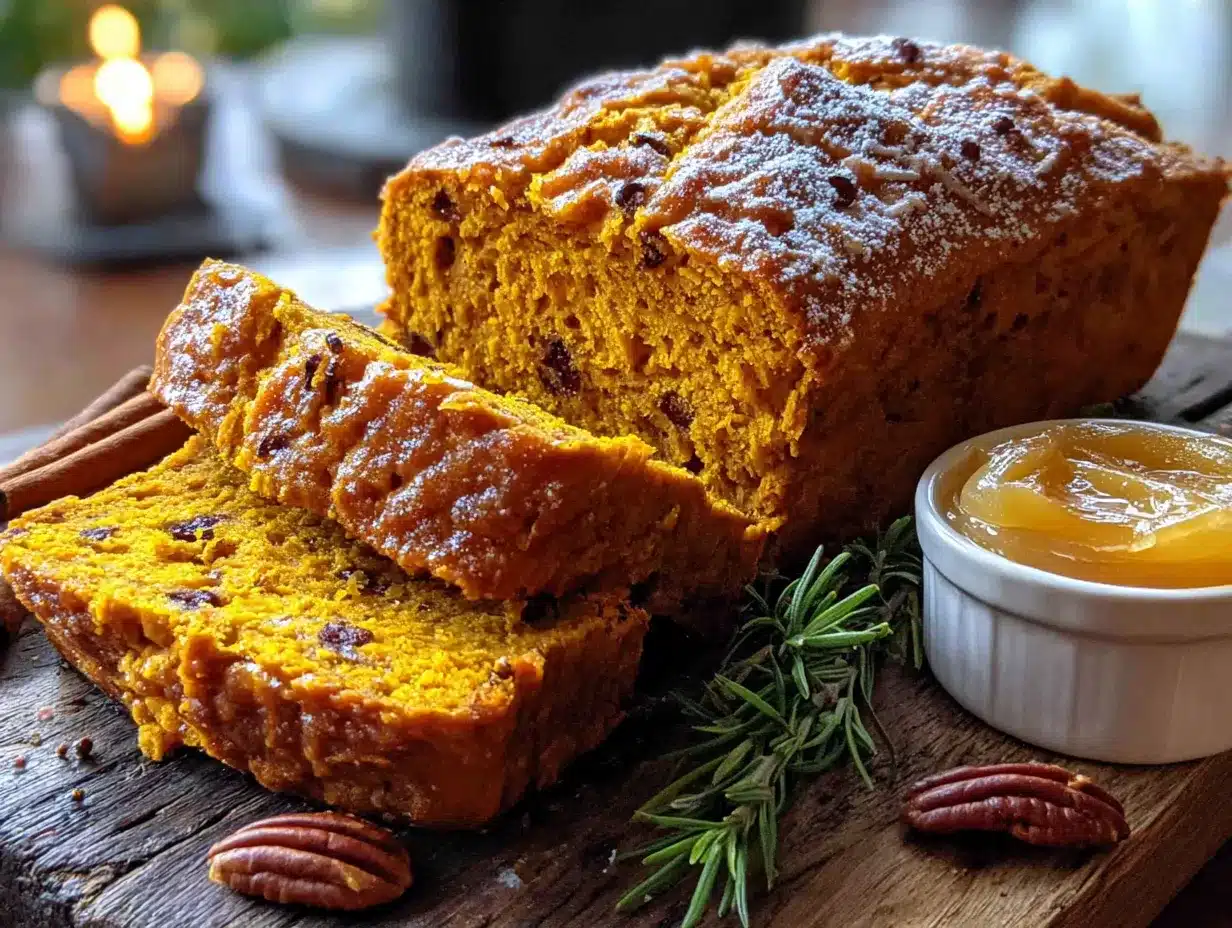
- Bakes Up Beautifully: The top gets this gorgeous crackled dome, and the inside is tender and golden. It looks impressive without any effort.
- Crowd-Pleaser: I’ve brought this to potlucks, brunches, and casual get-togethers, and it always disappears first. Even people who swear they don’t like sourdough end up asking for seconds.
What makes this recipe different from the dozens of other pumpkin breads out there is that tangy undertone from the sourdough. It’s subtle—you won’t taste “sour” in the way you do with a loaf of artisan bread—but it adds a depth that makes each bite more interesting. The maple butter takes it over the top, adding a sweet, buttery richness that complements the pumpkin without overpowering it. This isn’t just another pumpkin bread recipe; it’s the one you’ll come back to year after year.
What Ingredients You Will Need
This recipe uses simple, wholesome ingredients to deliver bold flavor and satisfying texture without the fuss. Most of these are pantry staples, which makes this a great last-minute bake when fall cravings hit.
For the Bread
- 1 cup (240g) pumpkin puree – Make sure you’re using pure pumpkin, not pumpkin pie filling. I prefer Libby’s for its consistent texture, but any brand works. If you’re feeling ambitious, you can roast and puree your own sugar pumpkins.
- 1 cup (240g) sourdough discard – This can be fed or unfed discard straight from the fridge. The tanginess adds complexity, but even a mild starter works beautifully.
- 1/2 cup (120ml) vegetable oil – Or any neutral oil like canola or avocado. You can also use melted coconut oil, though the flavor will be slightly different.
- 2 large eggs – Room temperature is best for even mixing. If you’re in a hurry, place them in a bowl of warm water for 5 minutes.
- 3/4 cup (150g) brown sugar – Packed firmly. Dark brown sugar gives a deeper molasses flavor, but light brown works too. (adds richness)
- 1/4 cup (50g) granulated sugar – Just enough to balance the tang without making it overly sweet.
- 1 1/2 cups (190g) all-purpose flour – Spoon and level for accuracy. You can substitute up to half with whole wheat pastry flour for a heartier texture.
- 1 teaspoon baking soda – Make sure it’s fresh! Old baking soda won’t give you the rise you need.
- 1/2 teaspoon baking powder – For extra lift.
- 1/2 teaspoon salt – Fine sea salt works best.
- 2 teaspoons pumpkin pie spice – Or make your own: 1 teaspoon cinnamon, 1/2 teaspoon ginger, 1/4 teaspoon nutmeg, 1/4 teaspoon cloves, and a pinch of allspice.
- 1 teaspoon vanilla extract – Pure vanilla adds warmth. (adds richness)
For the Maple Butter
- 1/2 cup (113g) unsalted butter – Softened to room temperature.
- 3 tablespoons pure maple syrup – Not pancake syrup! Grade A dark amber has the best flavor.
- Pinch of flaky sea salt – Optional, but highly recommended for that sweet-salty balance.
Ingredient Selection Tip: Look for pumpkin puree that lists only pumpkin as the ingredient. Some brands add spices or sugar, which can throw off the balance. For the sourdough discard, I keep a jar in the fridge specifically for baking—it develops a nice tang over a few days. If your discard is very fresh (less than 24 hours old), the tang will be milder, which is totally fine for this recipe.
Equipment Needed
- 9×5-inch loaf pan – A standard metal or glass pan works. If using dark nonstick, reduce oven temperature by 25°F to prevent over-browning.
- Mixing bowls – One large, one medium.
- Whisk and spatula – A flexible silicone spatula is great for scraping every bit of batter.
- Parchment paper – For easy removal. I cut a strip long enough to hang over the sides like handles.
- Hand mixer or stand mixer – You can mix by hand too, but a mixer makes the maple butter silky smooth.
- Cooling rack – Essential for even cooling and preventing a soggy bottom.
- Measuring cups and spoons – For accuracy, especially with the flour and spices.
If you don’t have a loaf pan, you can bake this in an 8×8 square pan—just reduce the baking time by about 10 minutes and check for doneness early. I’ve also made muffins with this batter (bake for 18-22 minutes at 350°F), and they’re perfect for grab-and-go breakfasts. For the maple butter, a small food processor works if you don’t want to use a mixer, though you’ll need to scrape the sides a few times.
Preparation Method
- Preheat your oven to 350°F (175°C). Position the rack in the center. Line your 9×5-inch loaf pan with parchment paper, leaving a 2-inch overhang on the long sides. Lightly grease the exposed sides with butter or cooking spray.
- In a large bowl, whisk together the dry ingredients. Combine the all-purpose flour, baking soda, baking powder, salt, and pumpkin pie spice. Whisk for about 20 seconds to aerate and distribute everything evenly. Set aside.
- In a medium bowl, mix the wet ingredients. Whisk together the pumpkin puree, sourdough discard, vegetable oil, eggs, brown sugar, granulated sugar, and vanilla extract. Whisk until smooth and well combined—about 30 seconds. The mixture should look like a thick, glossy orange batter.
- Pour the wet ingredients into the dry ingredients. Use a spatula to fold gently. Stir just until no streaks of flour remain—about 10 to 12 folds. A few lumps are fine; overmixing will make the bread tough. The batter will be thick and slightly sticky.
- Transfer the batter to the prepared loaf pan. Use the spatula to spread it evenly. Tap the pan gently on the counter a few times to release any air bubbles. For a bakery-style crack, run a butter knife down the center of the batter about 1/2 inch deep.
- Bake for 55 to 65 minutes. Start checking at 50 minutes. The bread is done when a toothpick inserted into the center comes out clean or with a few moist crumbs. The top should be golden brown and spring back when lightly pressed. If the top is browning too quickly, tent loosely with foil after 40 minutes.
- Cool in the pan for 15 minutes. Then lift the bread out using the parchment handles and transfer to a wire rack. Cool completely before slicing—about 1 to 2 hours. I know it’s tempting, but slicing warm will give you a crumbly mess. Trust me, I’ve learned this the hard way.
- While the bread cools, make the maple butter. In a small bowl, beat the softened butter with a hand mixer until creamy—about 1 minute. Add the maple syrup and a pinch of flaky sea salt. Beat for another 30 seconds until light and fluffy. Scrape into a small serving dish and refrigerate until ready to use.
Sensory Cue: When you fold the wet and dry ingredients together, the batter should smell fragrant with pumpkin and spice. As it bakes, your kitchen will fill with the most incredible warm, cozy aroma—like autumn in a loaf. The finished bread should feel firm to the touch but give slightly when pressed. The crack on top should be deep and golden, with the edges slightly darker than the center.
Cooking Tips & Techniques
After making this recipe more times than I can count (including a few spectacular failures), I’ve picked up some tricks that make a real difference. First, always spoon your flour into the measuring cup and level it off with a knife. Scooping directly from the bag can pack in up to 25% more flour, which will make your bread dry and dense. I learned this the hard way when my first batch came out more like a hockey puck than a loaf.
Another thing I’ve noticed: the temperature of your ingredients matters more than you think. Cold eggs and cold sourdough discard can make the batter seize up and create a tough crumb. Let everything sit out for about 30 minutes before you start mixing. If you forget, place the eggs in a bowl of warm water for 5 minutes and microwave the discard in 10-second bursts until it’s no longer cold to the touch.
One mistake I used to make was overmixing the batter. I wanted it perfectly smooth, but that develops the gluten too much and results in a rubbery texture. Stop folding as soon as the flour disappears. A few streaks are totally fine—they’ll bake out. Also, don’t skip the parchment paper. I’ve had loaves stick to ungreased pans, and there’s nothing sadder than a beautiful bread that won’t come out in one piece.
For the maple butter, make sure your butter is truly softened—not melted, not cold. If it’s too firm, the maple syrup won’t incorporate properly, and you’ll end up with a runny mess. Let the butter sit out for at least an hour before you start. If you’re in a rush, cut it into small cubes and let it sit for 15 minutes.
Variations & Adaptations
This recipe is wonderfully flexible. Here are some of my favorite variations:
- Gluten-Free Version: Substitute the all-purpose flour with a 1:1 gluten-free baking blend that contains xanthan gum. I’ve used Bob’s Red Mill with great results. The texture will be slightly more tender, but still delicious.
- Dairy-Free Option: Use melted coconut oil or a neutral vegetable oil instead of butter. For the maple butter, swap in a dairy-free butter alternative like Miyoko’s.
- Add-Ins: Fold in 1/2 cup of chocolate chips, chopped pecans, or dried cranberries after mixing the batter. I love adding toasted walnuts for extra crunch.
- Spice It Up: Add 1/4 teaspoon of black pepper or a pinch of cayenne for a warm, spicy kick that pairs beautifully with the maple butter.
- Lower Sugar: Reduce the brown sugar to 1/2 cup and the granulated sugar to 2 tablespoons. The bread will be less sweet but still moist and flavorful.
I once tried a version with a zucchini bread twist, swapping half the pumpkin puree for grated zucchini (squeezed dry). It was surprisingly good—the zucchini added extra moisture without changing the flavor much. If you’re feeling adventurous, give it a shot. Another time, I made a batch with a cinnamon streusel topping, and it was like a coffee cake and pumpkin bread had a delicious baby. Just mix 1/4 cup flour, 1/4 cup brown sugar, 2 tablespoons cold butter, and 1 teaspoon cinnamon until crumbly, then sprinkle over the batter before baking.
Serving & Storage Suggestions
This bread is best served at room temperature or slightly warm. I like to slice it thick—about 1 inch—and spread a generous layer of maple butter on each piece. If you’re feeling extra indulgent, toast the slices lightly before adding the butter. The warmth makes the maple butter melt into all the nooks and crannies, and honestly, it’s pure magic.
For a cozy fall breakfast, pair a slice with a hot cup of chai or a pumpkin spice latte. It also works beautifully as an afternoon snack with a cup of Earl Grey. If you’re serving it for dessert, a dollop of whipped cream and a drizzle of extra maple syrup takes it over the top.
Storage: Wrap the cooled bread tightly in plastic wrap or aluminum foil, and store at room temperature for up to 4 days. The maple butter keeps in an airtight container in the fridge for up to 2 weeks—if it lasts that long. For longer storage, freeze the whole loaf or individual slices. Wrap each slice in plastic wrap, then place in a freezer-safe bag. They’ll keep for up to 3 months. To thaw, just leave a slice on the counter for 30 minutes or pop it in the toaster.
One thing I love about this bread is that the flavors actually deepen after a day or two. The tang from the sourdough becomes more pronounced, and the spices meld together beautifully. So don’t be afraid to make it a day ahead—it might even be better.
Nutritional Information & Benefits
Per slice (based on 10 slices, without maple butter): approximately 280 calories, 12g fat, 38g carbohydrates, 3g fiber, 20g sugar, 5g protein. The maple butter adds about 60 calories per tablespoon.
Pumpkin puree is packed with vitamin A, which supports eye health and immune function. It’s also a good source of fiber, which helps keep you full and satisfied. Sourdough fermentation breaks down some of the gluten and phytic acid in the flour, making the nutrients more bioavailable. Plus, the natural probiotics in sourdough can support gut health—though most are killed during baking, the prebiotic fibers remain.
If you’re watching your sugar intake, you can reduce the sugar by a third without compromising the texture too much. For a lower-carb option, try substituting almond flour for half the all-purpose flour, though the texture will be denser. This recipe is vegetarian and can be made dairy-free with the substitutions mentioned above. It contains gluten and eggs, so it’s not suitable for those with celiac disease or egg allergies.
I personally love that this bread feels indulgent but isn’t loaded with refined sugar or unhealthy fats. It’s the kind of treat you can feel good about eating for breakfast—because sometimes, a slice of pumpkin bread with maple butter is exactly what you need to start the day right.
Conclusion
This sourdough pumpkin bread with maple butter has become my signature fall bake, and I think it’s about to become yours too. It’s the perfect balance of tangy and sweet, moist and tender, simple and special. Whether you’re using up sourdough discard, craving a cozy treat, or just looking for something to impress your friends (like Jen), this recipe delivers every single time.
I’d love to hear how yours turns out! Did you add any fun mix-ins? Did the maple butter blow your mind as much as it did mine? Drop a comment below and let me know. And if you’re looking for more fall baking inspiration, don’t miss my moist lemon blueberry zucchini bread or these fudgy chocolate zucchini brownies—they’re perfect for using up summer produce before the weather turns. Happy baking, friends. And remember: the best things in life are often made with a little bit of discard and a whole lot of love.
Frequently Asked Questions
Can I use active sourdough starter instead of discard?
Yes, you can. The texture will be slightly lighter because of the extra bubbles, but the flavor will be less tangy. If you use active starter, reduce the baking soda to 3/4 teaspoon to avoid a metallic aftertaste.
Why did my pumpkin bread sink in the middle?
This usually happens if the bread is underbaked or if the oven temperature is too low. Make sure your oven is fully preheated and that you’re using an oven thermometer for accuracy. Also, don’t open the oven door during the first 40 minutes of baking.
Can I make this recipe without a mixer?
Absolutely. You can whisk the wet ingredients by hand and fold in the dry ingredients with a spatula. For the maple butter, a fork works in a pinch, though the texture won’t be as fluffy. Just mash the softened butter with the maple syrup until combined.
How do I know when the bread is done?
Insert a toothpick into the center—it should come out clean or with a few moist crumbs. The top should be golden brown and spring back when lightly pressed. If the toothpick comes out wet with batter, bake for another 5 minutes and check again.
Can I freeze the maple butter?
Yes! Scoop the maple butter into an airtight container and freeze for up to 3 months. Thaw overnight in the refrigerator, then let it sit at room temperature for 15 minutes before serving. It might separate slightly, so give it a good stir before using.
Pin This Recipe!
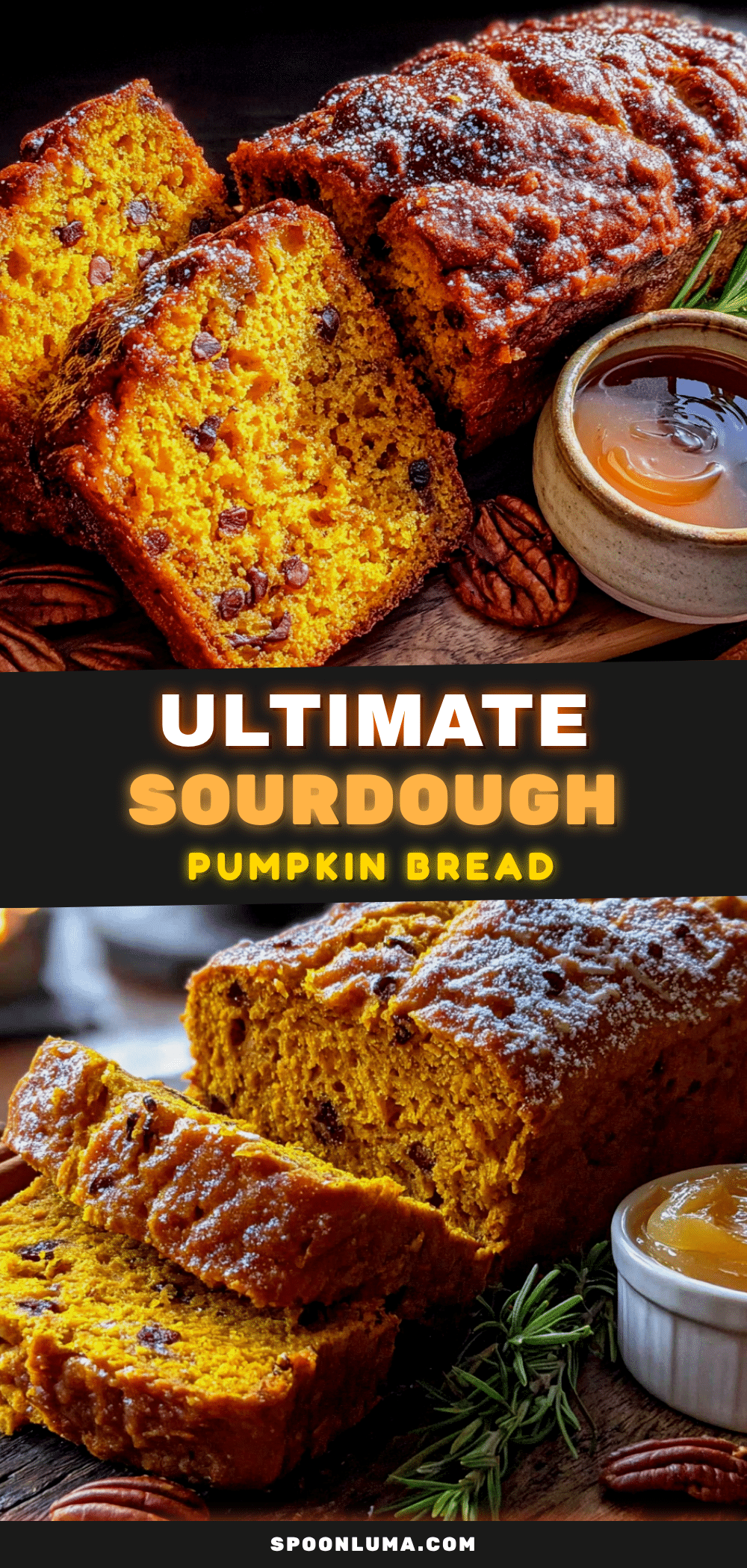
Best Sourdough Pumpkin Bread with Maple Butter
This sourdough pumpkin bread is incredibly moist, tender, and perfectly spiced with a subtle tang from sourdough discard. Topped with a sweet and salty maple butter, it’s the ultimate fall treat that will impress everyone.
- Prep Time: 15 minutes
- Cook Time: 55 minutes
- Total Time: 1 hour 10 minutes
- Yield: 10 servings 1x
- Category: Bread
- Cuisine: American
Ingredients
- 1 cup (240g) pumpkin puree
- 1 cup (240g) sourdough discard
- 1/2 cup (120ml) vegetable oil
- 2 large eggs, room temperature
- 3/4 cup (150g) brown sugar, packed
- 1/4 cup (50g) granulated sugar
- 1 1/2 cups (190g) all-purpose flour
- 1 teaspoon baking soda
- 1/2 teaspoon baking powder
- 1/2 teaspoon fine sea salt
- 2 teaspoons pumpkin pie spice
- 1 teaspoon vanilla extract
- 1/2 cup (113g) unsalted butter, softened
- 3 tablespoons pure maple syrup
- Pinch of flaky sea salt (optional)
Instructions
- Preheat your oven to 350°F (175°C). Position the rack in the center. Line your 9×5-inch loaf pan with parchment paper, leaving a 2-inch overhang on the long sides. Lightly grease the exposed sides with butter or cooking spray.
- In a large bowl, whisk together the all-purpose flour, baking soda, baking powder, salt, and pumpkin pie spice. Whisk for about 20 seconds to aerate and distribute everything evenly. Set aside.
- In a medium bowl, whisk together the pumpkin puree, sourdough discard, vegetable oil, eggs, brown sugar, granulated sugar, and vanilla extract. Whisk until smooth and well combined—about 30 seconds. The mixture should look like a thick, glossy orange batter.
- Pour the wet ingredients into the dry ingredients. Use a spatula to fold gently. Stir just until no streaks of flour remain—about 10 to 12 folds. A few lumps are fine; overmixing will make the bread tough. The batter will be thick and slightly sticky.
- Transfer the batter to the prepared loaf pan. Use the spatula to spread it evenly. Tap the pan gently on the counter a few times to release any air bubbles. For a bakery-style crack, run a butter knife down the center of the batter about 1/2 inch deep.
- Bake for 55 to 65 minutes. Start checking at 50 minutes. The bread is done when a toothpick inserted into the center comes out clean or with a few moist crumbs. The top should be golden brown and spring back when lightly pressed. If the top is browning too quickly, tent loosely with foil after 40 minutes.
- Cool in the pan for 15 minutes. Then lift the bread out using the parchment handles and transfer to a wire rack. Cool completely before slicing—about 1 to 2 hours.
- While the bread cools, make the maple butter. In a small bowl, beat the softened butter with a hand mixer until creamy—about 1 minute. Add the maple syrup and a pinch of flaky sea salt. Beat for another 30 seconds until light and fluffy. Scrape into a small serving dish and refrigerate until ready to use.
Notes
For best results, use room temperature ingredients. Spoon and level the flour for accuracy. Do not overmix the batter. The bread can be stored at room temperature for up to 4 days or frozen for up to 3 months. The maple butter keeps in the fridge for up to 2 weeks.
Nutrition
- Serving Size: 1 slice (1/10 of loa
- Calories: 280
- Sugar: 20
- Sodium: 280
- Fat: 12
- Saturated Fat: 3
- Carbohydrates: 38
- Fiber: 3
- Protein: 5
Keywords: sourdough pumpkin bread, pumpkin bread with sourdough discard, maple butter, fall baking, easy pumpkin bread, sourdough discard recipe