My neighbor across the hall, a guy named Marcus who lives mostly on protein shakes and takeout, saw me hauling a butternut squash up the stairs last fall and asked why I couldn’t just use canned pumpkin instead. I started to explain—the texture is different, the flavor profile changes, the color won’t be quite right—then stopped. Honestly, I had no good reason. I’d just never tried it. So I told him maybe he was onto something, and that night I made two versions side by side: one with my usual roasted butternut squash puree, and one with a can of pumpkin I’d grabbed on a whim.
The pumpkin version was fine. But the butternut squash version? That one made me close my eyes after the first bite. I mean, I’d been making this creamy butternut squash mac and cheese for years, and somehow Marcus’s offhand question made me realize I’d been taking that squash for granted. There’s something about roasting it yourself—the way the natural sugars caramelize, the silky texture it brings to the sauce—that you just can’t replicate with anything from a can. I almost burned a batch of breadcrumbs that night because I was too busy texting my sister about it.
Maybe you’ve had that moment where a recipe you’ve made a hundred times suddenly feels new again. That’s what this lightened up version did for me. It’s the same comfort food I’ve always loved, but with a sauce that’s velvety and rich from the squash instead of heavy cream. And honestly? I think it tastes better. The squash adds this subtle sweetness that plays off the sharp cheddar in a way that feels intentional, like they were always meant to be together. I keep making it because it proves you don’t have to choose between eating well and eating something that actually feels like a treat.
Why You’ll Love This Recipe
This creamy butternut squash mac and cheese isn’t just another healthy swap that leaves you disappointed. I’ve tested this recipe more times than I care to count—through burnt pans, overly watery sauces, and one particularly sad attempt where I forgot the cheese entirely (don’t ask). What I landed on is a version that actually delivers on flavor while sneaking in a full serving of vegetables.
- Quick & Easy : Comes together in about 35 minutes, most of which is hands-off roasting time. Perfect for those nights when you want comfort food without spending hours in the kitchen.
- Simple Ingredients : You’ll find everything at a regular grocery store. No specialty flours, no obscure cheeses, no ingredients that require a separate trip to three different shops.
- Perfect for Weeknights : Great for busy families, solo dinners, or those evenings when you need something warm and satisfying but don’t have energy for a production.
- Crowd-Pleaser : I’ve served this to kids who swear they hate squash, to cheese snobs, and to my dad who thinks “lightened up” means “flavorless.” All of them asked for seconds.
- Unbelievably Delicious : The sauce is creamy without being heavy, cheesy without being greasy, and the squash adds a natural sweetness that makes the cheddar pop.
What makes this different from other lightened up mac and cheese recipes is the method. Instead of just blending squash into a standard cheese sauce, I roast it first to concentrate the flavor, then blend it with just enough milk and cheese to create something that feels indulgent. It’s not a compromise—it’s an upgrade. The kind of recipe that makes you wonder why you ever made it the heavy way in the first place.
What Ingredients You Will Need
This recipe uses simple, wholesome ingredients that work together to create a sauce that’s creamy, cheesy, and surprisingly light. Most of these are pantry staples or easy to find at any grocery store.
- For the Squash Base:
- 1 medium butternut squash (about 2 pounds), peeled, seeded, and cubed into 1-inch pieces
- 1 tablespoon olive oil (for roasting; use avocado oil if you prefer)
- 1/2 teaspoon salt (I use fine sea salt for even distribution)
- 1/4 teaspoon black pepper
- For the Pasta:
- 8 ounces (about 2 1/2 cups) elbow macaroni or small shell pasta (I prefer De Cecco for its texture—it holds up well to the sauce)
- 1 tablespoon salt (for the pasta water)
- For the Sauce:
- 1 tablespoon unsalted butter (adds richness without going overboard)
- 1 small shallot, finely diced (about 2 tablespoons; you can substitute 1/4 cup diced onion)
- 2 cloves garlic, minced
- 1 cup low-sodium vegetable or chicken broth
- 1/2 cup milk (2% or whole works best; use unsweetened oat milk for dairy-free)
- 1 1/2 cups shredded sharp cheddar cheese (I recommend Cabot or Tillamook for best melting)
- 1/4 cup grated Parmesan cheese
- 1/2 teaspoon Dijon mustard (trust me—it brightens the whole sauce)
- 1/4 teaspoon smoked paprika
- 1/8 teaspoon cayenne pepper (optional, for a tiny kick)
- Salt and black pepper to taste
- For the Topping (Optional):
- 1/4 cup panko breadcrumbs
- 1 tablespoon melted butter or olive oil
- 2 tablespoons grated Parmesan cheese
When choosing your butternut squash, look for one that feels heavy for its size with firm, unblemished skin. The neck portion has less seeds and more flesh, making it easier to cube. If you’re short on time, you can find pre-cubed squash in the produce section—just know it might be slightly drier than fresh-cut.
For the cheese, I strongly recommend shredding it yourself. Pre-shredded cheese contains anti-caking agents that prevent it from melting smoothly into the sauce. It’s one of those small steps that makes a noticeable difference in texture.
Equipment Needed
You don’t need anything fancy for this recipe, which is part of why I love it. Here’s what you’ll need:
- Baking sheet : A rimmed sheet pan works best for roasting the squash without making a mess.
- Large pot : For boiling the pasta. Go with a 4- to 5-quart pot so there’s plenty of room.
- Medium saucepan : For making the sauce. A 2-quart saucepan is the perfect size.
- Blender or immersion blender : A regular blender gives you the smoothest sauce, but an immersion blender works fine too. I’ve used both—the immersion blender means one less thing to wash.
- Colander : For draining the pasta.
- Wooden spoon or silicone spatula : For stirring the sauce without scratching your pans.
- Measuring cups and spoons : Standard set for accuracy.
- Chef’s knife and cutting board : For prepping the squash and shallot.
- 9×13-inch baking dish : If you’re making the baked version with the breadcrumb topping.
If you don’t have a blender, you can mash the roasted squash with a potato masher or fork, then whisk it vigorously into the sauce. The texture won’t be quite as silky, but it’ll still be delicious. My first few attempts were made this way, and honestly, I didn’t know what I was missing until I tried the blended version.
Preparation Method
- Preheat your oven to 400°F (200°C). Line a rimmed baking sheet with parchment paper or foil for easy cleanup.
- Prep the squash. Toss the cubed butternut squash with the olive oil, salt, and pepper. Spread it in a single layer on the prepared baking sheet. Make sure the pieces aren’t crowded, or they’ll steam instead of roast. Roast for 25-30 minutes, flipping halfway through, until the squash is tender and the edges are starting to brown. You’ll know it’s done when a fork slides in easily.
- Cook the pasta. While the squash roasts, bring a large pot of salted water to a boil. Add the macaroni and cook according to package directions until al dente—usually about 7-8 minutes. Drain well, but don’t rinse it. The starch left on the pasta helps the sauce cling better. Set aside.
- Start the sauce base. In a medium saucepan, melt the butter over medium heat. Add the diced shallot and cook for 2-3 minutes until softened and translucent. Add the minced garlic and cook for another 30 seconds until fragrant. Don’t let the garlic burn—it turns bitter fast.
- Blend the squash. Transfer the roasted squash to your blender. Add the cooked shallot and garlic mixture, along with the broth and milk. Blend on high until completely smooth. This takes about 45-60 seconds. The mixture should look like a thick, velvety soup. If it seems too thick, add another tablespoon of milk.
- Make the cheese sauce. Pour the blended squash mixture back into the saucepan. Set it over medium-low heat and stir in the shredded cheddar, Parmesan, Dijon mustard, smoked paprika, and cayenne if using. Stir continuously until the cheese is fully melted and the sauce is smooth. This takes about 3-4 minutes. Don’t let it boil—high heat can make the cheese grainy. Taste and adjust salt and pepper as needed.
- Combine everything. Add the cooked pasta to the sauce and stir until every piece is coated. If the sauce seems too thick, add a splash of the reserved pasta water to loosen it up. The sauce will continue to thicken as it sits, so don’t worry if it looks a bit loose at this stage.
- Optional baked version. If you want that crispy topping, preheat your broiler. Transfer the mac and cheese to a 9×13-inch baking dish. In a small bowl, mix the panko breadcrumbs with the melted butter and Parmesan. Sprinkle evenly over the top. Broil for 2-3 minutes until golden brown. Watch it carefully—breadcrumbs go from perfect to burnt in seconds.
- Rest and serve. Let the mac and cheese sit for 5 minutes before serving. This allows the sauce to set slightly so it’s creamy but not runny. Serve warm, garnished with a sprinkle of fresh parsley or extra black pepper if you like.
Cooking Tips & Techniques
I’ve made this recipe enough times to learn a few things the hard way. Here’s what I wish someone had told me:
Roast the squash until it’s actually caramelized. The first few times I made this, I pulled the squash out as soon as it was tender. The sauce was fine, but it was missing that deep, almost nutty sweetness that makes this recipe special. Now I let it go until the edges are deeply browned and the pieces have shrunk a bit. That browning is where the flavor lives.
Don’t skip the Dijon mustard. I know it sounds weird in mac and cheese, but it does something magical. The acidity cuts through the richness and makes the cheese taste cheesier. You won’t taste mustard at all—you’ll just notice that the sauce has more depth. I forgot it once and the dish felt flat. Never again.
Grate your own cheese. I mentioned this earlier, but it’s worth repeating. Pre-shredded cheese is coated in cellulose and other anti-caking agents that prevent it from melting smoothly. Your sauce will be grainy instead of silky. I learned this lesson after making a lumpy sauce for a dinner party and having to explain that it was “rustic.”
Reserve some pasta water before draining. That starchy water is liquid gold for adjusting sauce consistency. If your mac and cheese seems too thick after sitting for a few minutes, stir in a tablespoon or two of the reserved water. It loosens the sauce without diluting the flavor the way plain water would.
Let it rest before serving. I know it’s hard to wait when the kitchen smells this good, but that 5-minute rest makes a real difference. The sauce continues to thicken and coat the pasta more evenly. If you serve it immediately, it tends to be a bit loose and separates more easily.
Variations & Adaptations
This recipe is surprisingly flexible. Here are some ways I’ve adapted it over the years:
Make it gluten-free. Use your favorite gluten-free pasta—I’ve had good luck with chickpea-based or brown rice pasta. The sauce itself is naturally gluten-free if you skip the breadcrumb topping. For the topping, crushed gluten-free crackers or almond flour mixed with butter work well.
Add some protein. I’ve stirred in shredded rotisserie chicken, crispy bacon bits, and even leftover Italian sausage. The squash sauce pairs especially well with sage and sausage—it’s a classic fall combination that works beautifully here. Just fold the protein in after you’ve combined the pasta and sauce.
Change up the cheese. Sharp cheddar is my go-to, but this recipe works with lots of different cheeses. Try Gruyère for a nuttier flavor, smoked Gouda for a deeper smokiness, or Monterey Jack for a milder, creamier sauce. Just avoid super oily cheeses like mozzarella, which can make the sauce greasy.
Make it dairy-free. Use vegan butter, unsweetened oat milk or cashew milk, and your favorite dairy-free cheese shreds. I’ve found that Daiya and Violife melt reasonably well. The texture won’t be exactly the same, but it’s still creamy and satisfying. Add an extra tablespoon of nutritional yeast for a cheesy flavor boost.
Try different squash. Butternut is my favorite for its sweetness and smooth texture, but kabocha, buttercup, or even sweet potato work well. Each will bring a slightly different flavor and color to the sauce. I made a version with red kuri squash last winter that was gorgeous—it turned the sauce a deep golden orange.
Serving & Storage Suggestions
This creamy butternut squash mac and cheese is best served warm, straight from the stove or oven. I like to portion it into bowls and top each with a sprinkle of fresh parsley, a crack of black pepper, and maybe a few extra breadcrumbs for crunch.
For side dishes, a simple green salad with a lemony vinaigrette cuts through the richness beautifully. Roasted broccoli or Brussels sprouts also work well—they match the cozy fall vibe of the main dish. If you’re serving this as a main course, it pairs nicely with a piece of crusty bread or a simple protein like grilled chicken or roasted salmon.
Storage instructions: Leftovers keep well in an airtight container in the refrigerator for up to 4 days. The sauce will thicken as it sits, so don’t be alarmed if it looks more like a casserole than a creamy pasta when you pull it out.
Reheating tips: The best way to reheat is on the stovetop over medium-low heat with a splash of milk or broth. Stir frequently until heated through. The microwave works in a pinch, but the texture won’t be as creamy. If you’re reheating a large batch, add a little extra liquid and cover the pan to trap steam.
Freezer instructions: This recipe freezes surprisingly well. Let it cool completely, then transfer to a freezer-safe container. It will keep for up to 3 months. Thaw overnight in the refrigerator before reheating. Note that the texture may be slightly softer after freezing, but the flavor remains excellent.
One thing I’ve noticed: the flavors actually deepen after a day in the fridge. The squash and cheese meld together more, and the whole dish tastes even more comforting on day two. If you can stand to wait, leftovers are almost better than the fresh version.
Nutritional Information & Benefits
Here’s the thing about this recipe—it feels indulgent, but it’s actually pretty reasonable nutritionally. One serving (about 1 1/2 cups) contains approximately:
- Calories: 380-420
- Protein: 18g
- Carbohydrates: 45g
- Fiber: 6g
- Fat: 16g
- Saturated fat: 8g
- Sodium: 580mg
The butternut squash is the real star here from a health perspective. It’s packed with vitamin A (one serving provides over 100% of your daily needs), vitamin C, potassium, and fiber. The beta-carotene in squash gives it that gorgeous orange color and acts as a powerful antioxidant in your body.
Compared to traditional mac and cheese, this version has about 40% fewer calories and half the saturated fat. You’re getting a full serving of vegetables in every portion, plus the protein from the cheese and pasta keeps you full longer. It’s the kind of meal that makes you feel good without making you feel deprived.
If you’re watching your sodium, use low-sodium broth and go easy on the added salt. The cheese brings plenty of saltiness on its own. For a lower-carb option, serve it with roasted vegetables instead of pasta, or use chickpea pasta for extra protein and fiber.
Conclusion
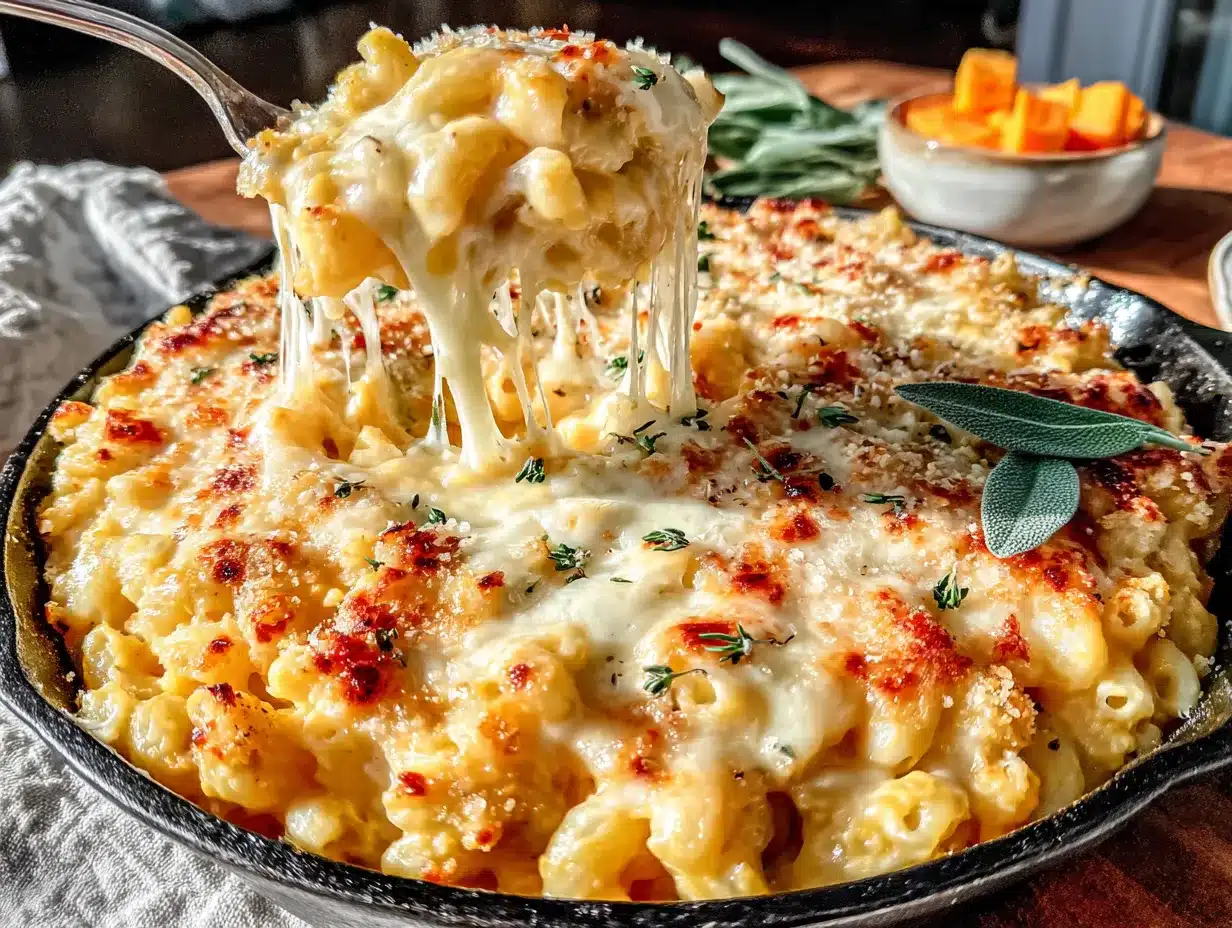
This creamy butternut squash mac and cheese has become my go-to comfort food for good reason. It’s the recipe I make when I want something that feels like a hug in a bowl but doesn’t leave me feeling weighed down afterward. The squash adds a natural sweetness and silky texture that makes the sauce genuinely better than the heavy cream versions I used to make.
I love that this recipe proves you don’t have to choose between eating well and eating something that actually tastes amazing. It’s become my standard answer when someone asks for a healthy meal that doesn’t taste like a compromise. And honestly? It’s just fun to make. There’s something satisfying about watching that roasted squash transform into a velvety sauce, knowing you’re about to eat something that’s both nourishing and genuinely delicious.
I’d love to hear how this turns out for you. Did you add any fun mix-ins? Try a different cheese combination? Maybe even take Marcus’s advice and experiment with pumpkin? Drop a comment below and let me know—I read every single one, and your variations often inspire my next kitchen experiment. And if you loved this, I think you’ll also enjoy my creamy Tuscan chicken skillet for another lightened-up comfort food win.
Happy cooking, friends. Go make something that feeds both your body and your soul.
Frequently Asked Questions
Can I use frozen butternut squash instead of fresh?
Yes, absolutely. Frozen butternut squash works well here and saves you the prep time. Just thaw it first and pat it dry before roasting to remove excess moisture. You may need to roast it a few minutes longer since frozen squash tends to release more water.
Why did my sauce turn out grainy?
Grainy sauce usually happens for one of two reasons: the cheese was pre-shredded (those anti-caking agents are the culprit) or the sauce got too hot after adding the cheese. Keep the heat at medium-low and stir constantly once the cheese goes in. If it does get grainy, try blending it with an immersion blender to smooth it out.
Can I make this ahead of time?
Definitely. You can prepare the entire dish up to 24 hours in advance. Assemble everything in the baking dish, cover it, and refrigerate. When you’re ready to serve, bake it at 350°F for 15-20 minutes, then add the breadcrumb topping and broil for 2-3 minutes. You might need to add a splash of milk before baking since the sauce thickens as it sits.
Is this recipe kid-friendly?
In my experience, yes—even kids who claim to hate squash. The cheese and pasta are familiar, and the squash blends into the sauce so completely that most kids don’t even notice it’s there. If you’re worried, start by mixing the squash sauce with regular cheese sauce in a 50/50 ratio, then gradually increase the squash over time.
Can I skip the roasting step and just boil the squash?
You can, but I really don’t recommend it. Roasting concentrates the squash’s natural sugars and adds a depth of flavor that boiling just can’t replicate. The sauce will be noticeably sweeter and more complex with roasted squash. If you’re truly short on time, you can microwave the cubed squash for 5-7 minutes until tender, then proceed with the recipe—it’s not as good as roasting, but it’s better than boiling.
PrintCreamy Butternut Squash Mac and Cheese: Easy Lightened Up Recipe

This creamy butternut squash mac and cheese is a lightened up comfort food that delivers on flavor while sneaking in a full serving of vegetables. The roasted squash adds natural sweetness and silky texture, making the sauce genuinely better than heavy cream versions.
- Prep Time: 15 minutes
- Cook Time: 30 minutes
- Total Time: 45 minutes
- Yield: 4 servings 1x
- Category: Main Course
- Cuisine: American
Ingredients
- 1 medium butternut squash (about 2 pounds), peeled, seeded, and cubed into 1-inch pieces
- 1 tablespoon olive oil
- 1/2 teaspoon fine sea salt
- 1/4 teaspoon black pepper
- 8 ounces (about 2 1/2 cups) elbow macaroni or small shell pasta
- 1 tablespoon salt (for pasta water)
- 1 tablespoon unsalted butter
- 1 small shallot, finely diced (about 2 tablespoons)
- 2 cloves garlic, minced
- 1 cup low-sodium vegetable or chicken broth
- 1/2 cup milk (2% or whole)
- 1 1/2 cups shredded sharp cheddar cheese
- 1/4 cup grated Parmesan cheese
- 1/2 teaspoon Dijon mustard
- 1/4 teaspoon smoked paprika
- 1/8 teaspoon cayenne pepper (optional)
- Salt and black pepper to taste
- 1/4 cup panko breadcrumbs (optional topping)
- 1 tablespoon melted butter or olive oil (optional topping)
- 2 tablespoons grated Parmesan cheese (optional topping)
Instructions
- Preheat your oven to 400°F (200°C). Line a rimmed baking sheet with parchment paper or foil.
- Toss the cubed butternut squash with olive oil, salt, and pepper. Spread in a single layer on the prepared baking sheet. Roast for 25-30 minutes, flipping halfway, until tender and edges are browned.
- While squash roasts, bring a large pot of salted water to a boil. Cook macaroni according to package directions until al dente (about 7-8 minutes). Drain well, do not rinse.
- In a medium saucepan, melt butter over medium heat. Add diced shallot and cook 2-3 minutes until softened. Add minced garlic and cook 30 seconds until fragrant.
- Transfer roasted squash to a blender. Add cooked shallot and garlic mixture, broth, and milk. Blend on high until completely smooth (about 45-60 seconds).
- Pour blended squash mixture back into the saucepan over medium-low heat. Stir in shredded cheddar, Parmesan, Dijon mustard, smoked paprika, and cayenne (if using). Stir continuously until cheese is melted and sauce is smooth (about 3-4 minutes). Season with salt and pepper to taste.
- Add cooked pasta to the sauce and stir until well coated. If sauce is too thick, add a splash of reserved pasta water.
- Optional baked version: Preheat broiler. Transfer mac and cheese to a 9×13-inch baking dish. Mix panko breadcrumbs with melted butter and Parmesan. Sprinkle over top. Broil 2-3 minutes until golden brown.
- Let mac and cheese rest for 5 minutes before serving. Serve warm, garnished with fresh parsley or extra black pepper if desired.
Notes
Roast squash until deeply caramelized for best flavor. Do not skip the Dijon mustard—it brightens the sauce. Grate your own cheese for smooth melting. Reserve pasta water to adjust sauce consistency. Let the dish rest 5 minutes before serving for best texture.
Nutrition
- Serving Size: 1 1/2 cups
- Calories: 400
- Sugar: 8
- Sodium: 580
- Fat: 16
- Saturated Fat: 8
- Carbohydrates: 45
- Fiber: 6
- Protein: 18
Keywords: butternut squash mac and cheese, lightened up mac and cheese, healthy mac and cheese, creamy mac and cheese, fall comfort food, vegetarian mac and cheese